Choosing a Men's Performance Supplement: A Six-Point Checklist
Before buying any men's performance supplement, check six things: disclosed doses vs. a proprietary blend, standardized extract vs. plain powder, animal-derived ingredients, third-party testing, whether the listing matches the label, and the real return window and price per day. This checklist walks through each one using general product types, not brand names.
Check 1: disclosed doses vs. proprietary blends
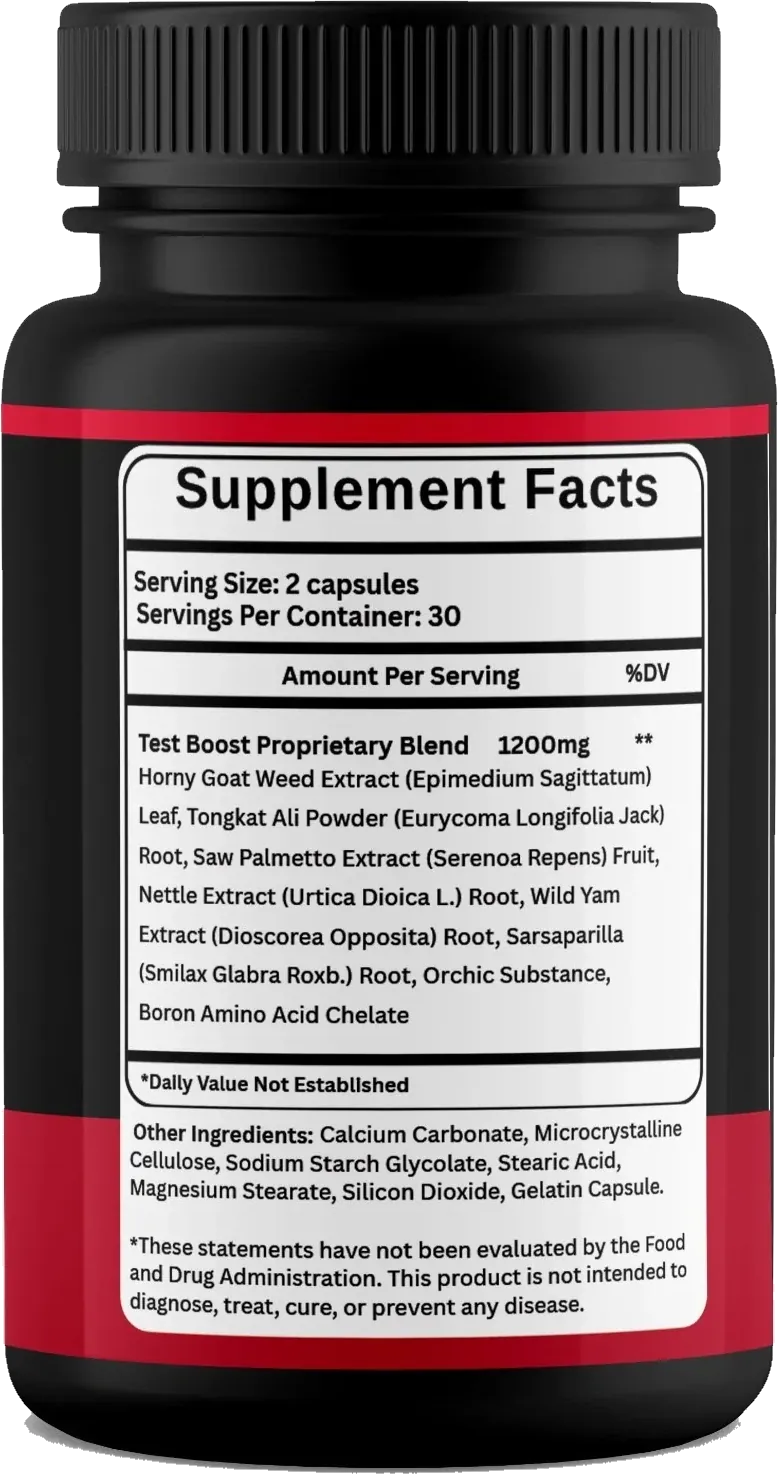
The single biggest tell is whether a label discloses each amount. A fully disclosed label lists a milligram number next to every ingredient. A proprietary blend lists a total weight for the whole mix, with no individual amounts.
A proprietary blend is legal, but it means you cannot check whether any one ingredient is anywhere near the dose research actually used. When eight ingredients share one total, most of them are probably far below a useful amount.
Look at the Supplement Facts panel before you buy. If you see one bolded total weight followed by a list of ingredients and no numbers next to any of them, you are looking at a proprietary blend.
This does not mean the product is fake or useless. It means you are trusting the maker's judgment on the mix, instead of being able to check it yourself against a study. That trade-off is worth knowing about before you compare price tags between two very different label styles.
Check 2: standardized extract vs. powder
The word next to a plant ingredient matters almost as much as the amount. "Extract" or "standardized extract" means the maker concentrated and measured a specific compound. "Powder" usually means the dried, ground plant, with no stated concentration.
| Form | What it means | What to expect |
|---|---|---|
| Standardized extract | Concentrated to a known percentage of an active compound | Closer to what a clinical trial actually tested |
| Plain powder | Dried, ground plant material, no stated concentration | Strength can vary a lot between batches and brands |
| Proprietary blend, powder form | A mix of powders inside one undisclosed total | Hardest form to evaluate; treat claims cautiously |
Tongkat ali's human research mostly used a standardized root extract at 200-600 mg a day (Leisegang et al., 2022). A product listing tongkat ali as a plain powder in an undisclosed amount is not the same thing the trials tested.
A quick way to check: look for a percentage or a named marker compound next to the ingredient, such as "20% icariin" or "standardized to eurycomanone." No percentage and no marker compound usually means a plain powder, whatever the marketing copy around it says.
Check 3: animal-derived ingredients
Several traditional men's formulas include animal-derived ingredients, most often glandular tissue from cattle, sold under names like "orchic substance" or "orchic extract." If you are vegetarian, vegan, or simply want to know what you are swallowing, this is worth checking before you order.
- Scan the ingredient list for "orchic," "glandular" or "organ" tissue
- Check the capsule shell: gelatin capsules are animal-derived; "vegetable capsule" or "vcaps" are not
- Bovine (cattle) tissue carries a small, well-managed BSE-related import concern that FDA addresses through import controls (U.S. et al., 2024)
None of this means an animal-derived ingredient is unsafe by default. It means it is not vegetarian, not vegan, and worth knowing about before a bottle arrives at your door if that matters to you or someone you buy it for.
Check 4: third-party testing
Third-party testing means an independent lab, not the manufacturer, checked the product for what is actually inside and for contaminants. A real certificate of analysis names the lab, the test method and the specific batch it covers.
Signs of real third-party testing
- A named, accredited lab you can look up
- A batch-specific report you can request or view
- Test methods listed, not just a pass/fail claim
Weaker signals
- A lot number with no linked lab report
- "Tested for quality" with no lab named
- A certificate that is a template, not batch-specific
A lot number and a CoA reference on their own are not proof of testing. Ask the seller directly for the actual lab report before you assume one exists, and treat a vague answer, or no answer, as useful information in itself.
Check 5: listing-vs-label mismatches
A marketplace listing's item specifics or bullet points are written by a marketing team and can drift out of sync with the actual printed label. The clearest example: a listing that names an ingredient the Supplement Facts panel does not show, or leaves one out that the panel does show.
Before you buy, zoom into the actual label photo, not just the listing description. If the two disagree, the printed label is what is really inside the bottle, and it is the only version worth trusting.
If a seller cannot explain a mismatch, or the listing photo is too small or blurry to read the panel, that is a reasonable reason to message the seller before you order, not after the bottle arrives.
Check 6: return window length and price per day
A generous-sounding guarantee on the bottle seal does not always match the return window printed on the listing. Read the listing's actual return terms, not just the seal, before you buy a multi-bottle pack.
| Question | Why it matters |
|---|---|
| How many days do I have to return it? | Some blends take weeks to judge; a short window can close before you know if it suits you |
| Who pays return shipping? | Buyer-paid return shipping adds a real cost if you decide to send it back |
| Does the bottle seal match the listing terms? | A seal can say one thing while the listing prints a shorter, different window |
| What is the price per day, not just per bottle? | Bigger packs often lower the per-bottle price, but only pay less per day if you finish the pack |
Price per day is the fairest way to compare packs, including across different brands. Divide the total order price by the number of days it actually lasts at the labeled serving, not by the number of bottles, since serving sizes and capsule counts differ from product to product.
How the main product types compare
| Feature | Fully disclosed formula | Standardized single-ingredient extract | Typical proprietary blend |
|---|---|---|---|
| Amounts shown per ingredient | Yes | Yes (one ingredient) | Usually no |
| Easiest to check against research | Yes | Yes | Hardest |
| Number of ingredients, typically | 5-12 | 1 | 6-20 |
| Price, typically | Mid to higher | Varies widely | Often lower per bottle |
| Best for | Wanting to verify every dose | Wanting one ingredient at a known dose | Trying a broad, lower-cost blend |
None of these categories is automatically the "right" choice. A fully disclosed formula is easiest to verify. A single-ingredient extract is easiest to match to a specific study. A proprietary blend can be the cheapest way to try several traditional ingredients at once, as long as you accept that you cannot check the doses. See our own Horse Force ingredients breakdown for how one real proprietary blend stacks up, dose by dose.
A short buying process you can reuse
Read the Supplement Facts photo first
Not the listing description. Check for disclosed amounts, extract vs. powder, and any animal-derived ingredients.
Look for a real third-party test
Ask the seller for a batch-specific lab report if one is not already linked. "Tested" alone is not proof.
Compare listing text to the label
If they disagree on an ingredient, trust the printed label, and ask the seller why.
Check the return window and price per day
Divide the total price by days of supply, and confirm who pays return shipping if it does not work out.
Run any product, including Horse Force, through these six checks before you order. Our own men's performance guide covers the habits that matter even more than the supplement choice. None of these six checks takes more than a few minutes, and together they catch most of the red flags that turn a reasonable-sounding listing into a disappointing order.
Choosing a Supplement: common questions
What is the difference between a disclosed dose and a proprietary blend?
A disclosed dose lists a milligram amount next to each ingredient. A proprietary blend lists one total weight for the whole mix, with no individual amounts.
Is a standardized extract always better than a powder?
For most research-backed benefits, yes, because trials mostly test standardized extracts at a known concentration. A powder's strength is harder to predict.
How do I know if a product has animal-derived ingredients?
Check the ingredient list for glandular or organ tissue, and check whether the capsule shell is gelatin (animal) or vegetable-based.
What counts as real third-party testing?
A batch-specific report from a named, accredited lab, listing the test method, not just a general "tested for quality" claim.
Why would a listing and a label disagree?
Listings are often written separately from the label and can go out of date or contain errors. Always trust the printed label photo.
How do I compare price fairly between packs?
Divide the total price by the days of supply at the labeled serving size, not just by the number of bottles.
Who pays for returns if the product doesn't work for me?
It depends on the listing. Many print that the buyer pays return shipping, which is worth checking before you order a large pack.
Does this checklist apply to Horse Force too?
Yes. We use these same six checks on our own product pages, including where Horse Force's blend and listing terms fall short.
Keep reading
What are the ingredients in Horse Force?
See how one real proprietary blend holds up against this checklist.
Read →What actually helps men's energy and stamina?
Sleep, training, food and stress habits that matter more than any supplement.
Read →How much does Horse Force cost?
Pack sizes, totals and price per day from the marketplace listing.
Read →Order Horse Force from the authorized retailer
60 capsules per bottle, 2 a day. Packs of 3, 6 or 9 bottles run from $10.26 a bottle on the listing, with 30-day returns. Questions first? Call +1 (302) 200-3480.